Keep up to date with the latest news
 Jobenvoy Master
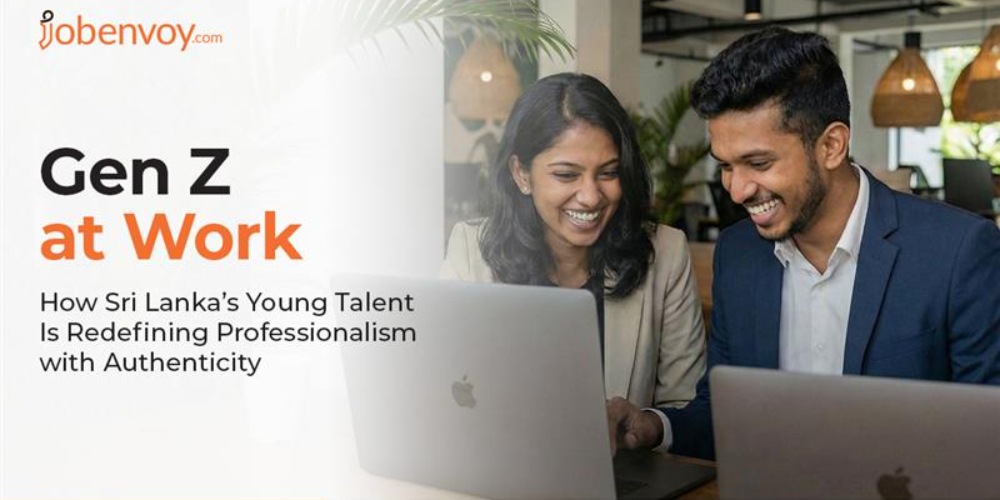
Across Sri Lanka’s evolving job market, Gen Z at work is no longer a future trend. It is a present-day force reshaping how professionalism, careers, and workplace culture are defined. This generation is entering offices with different expectations, different values, and a different understanding of what success looks like.
Unlike previous generations, Gen Z does not measure professionalism through rigid hierarchies or formal appearances. They value honesty, flexibility, purpose, and above all, workplace authenticity. From Colombo’s tech ecosystem to creative hubs in Kandy and Galle, young professionals are challenging outdated norms and asking companies to evolve.
For employers, recruiters, and leaders in Sri Lanka, understanding this shift is no longer optional. It is essential for attracting, engaging, and retaining the next generation of talent.
Generation Z typically includes individuals born between the mid-1990s and early 2010s. They grew up with smartphones, social platforms, and constant digital access. In Sri Lanka, this means young professionals entering the workforce already fluent in technology, global trends, and online collaboration.
Unlike Millennials, Gen Z does not separate personal identity from professional life. Their values travel with them into the workplace. They expect employers to reflect ethical behavior, inclusivity, and transparency. Whether joining a startup in Colombo or a growing business in Jaffna, Gen Z wants work that feels real and aligned with who they are.
As Sri Lanka competes in a global talent economy, Gen Z’s influence is not just significant, it is transformative.
Traditional professionalism was built on formality, strict dress codes, and top-down authority. Gen Z at work challenges this model. For them, professionalism is rooted in contribution, accountability, and honesty.
In Sri Lankan workplaces, this shift is visible through
To Gen Z, being professional means being genuine while delivering value.
Workplace authenticity is central to how Gen Z evaluates employers. They want organizations that practice what they preach, especially around ethics, social impact, and wellbeing.
For Gen Z professionals in Sri Lanka, authenticity includes
A company that speaks about values without acting on them quickly loses credibility with this generation.
Gen Z job seekers follow a deliberate and digital-first approach. They use platforms like TopJobs.lk, MyJobs.lk, and Ikman Jobs, alongside LinkedIn and Instagram.
Their decision making goes beyond salary. They look for
A confusing or slow hiring process often results in immediate disengagement.
For Gen Z, a résumé is no longer limited to a PDF. Platforms like LinkedIn, Instagram, and even TikTok have become extensions of professional identity.
They showcase projects, skills, opinions, and values publicly. In Sri Lanka’s job market, employers increasingly review social profiles to understand candidates beyond qualifications. Authentic storytelling now carries as much weight as credentials.
Many traditional recruitment practices unintentionally repel Gen Z talent. Common issues include
Gen Z expects clarity, speed, and transparency. When these are missing, candidates move on quickly.
The influence of Gen Z at work is reshaping recruitment across Sri Lanka. Key trends include
Organizations adapting to these shifts see higher engagement from younger candidates.
Gen Z evaluates employers based on real inclusion, not slogans. They look at
In Sri Lanka’s multicultural society, these expectations are deeply relevant and widely shared.
Rigid schedules are losing appeal. Gen Z professionals prefer
With traffic congestion and lifestyle balance being real concerns in Sri Lanka, flexibility has become a priority rather than a bonus.
Gen Z expects continuous feedback, not annual reviews. They value
They also actively reject burnout culture. Companies that support mental health, respect boundaries, and offer wellness initiatives stand out strongly.
Gen Z treats careers as evolving brands. Through personal branding, they
In Sri Lanka, this approach is especially powerful in tech, creative, and consulting roles.
While compensation matters, Gen Z often places equal or greater value on culture. They want workplaces that encourage collaboration, wellbeing, and purpose. In many cases, company culture becomes the deciding factor in accepting a job offer.
Gen Z respects leaders who listen, mentor, and show vulnerability. Authority alone no longer earns trust. Empathetic leadership creates stronger engagement and loyalty among young teams.
Gen Z at work is not a passing phase. It represents a fundamental shift in how professionalism and success are defined. In Sri Lanka’s job market, this generation is driving a move toward authenticity, flexibility, and purpose-driven work.
Organizations that listen, adapt, and lead with transparency will not only attract Gen Z talent but shape the future of work across the island.
1.
What does Gen Z value most in the workplace?
Authenticity, flexibility, transparency, and
alignment with personal values.
2. How do Gen Z job
seekers in Sri Lanka find jobs?
They use local job portals, social media
platforms, and remote-friendly global opportunities.
3. Why is workplace
authenticity important to Gen Z?
It builds trust, reflects real values, and
supports long-term engagement.
4. How can companies
attract Gen Z talent?
By offering clear communication, flexible work
models, strong culture, and digital-first recruitment.
5. Can traditional
companies still appeal to Gen Z?
Yes, by modernizing culture, improving
transparency, and aligning leadership with Gen Z expectations.
Don't have an account? Sign up
By Signing up, you confirm that you have read and agree with Jobenvoy.com's Terms & Conditions

 Menu
Menu
 Close
Close


 Sign up with Google